
By Kevin Wilkerson, PubClub.com Spirits Editor
On the surface, it seems as natural as a long wave on Waikiki Beach or the sparkling calcite crystals on a mountain top that gave Diamond Head its name.
Rum and Hawaii. Mai Tais and tropical breezes. Tiki drink and tiki bars.
But when you look at the history of rum in Hawaii well, there isn’t much of it. In fact it’s only until recently that the industry has really even begun to produce quality rums, led by Kōloa Rum Co,, which makes rum on Kaua’i. Other distillers have followed: Kuleana Rum Works, Hali’imaile Distilling and Kō Hana Distillers.
This is despite the fact that Hawaii once had massive sugar plantations, dating back some 1,500 years ago when the Polynesians brought sugar cane to the islands. But, unlike the Caribbean – which many claim to be the birthplace of rum, tho I did hear from one source at Tiki Oasis that it came from the Philippines – that sugar cane was not distilled and turned into a sprit. Instead, it was harvested for its base product: sugar.
Ever seen those little sugar packets tableside at restaurants and wondered what the C&H on the packaging mean? It stands for California & Hawaii, meaning the sugar came from Hawaii and was packaged in California.
Sugar dominated Hawaii’s economy for centuries but began to slow after 1959 when Hawaii became a state. That’s because the cheap labor primarily from China, Japan and the Philippines.used to cut and process it was no longer possible. Rising labor costs, along with higher transportation cost and increased competition from countries such as Brazil pretty much doomed Hawaii’s sugar industry.
But a few spirited people wanted to use the old plantations for another use: rum.
Hawaii has ideal conditions to make rum. Its volcanic soil and good climate that enables it to plant and harvest all year and no real “rules” as to how rum is to be cultivated and produced makes for some tasty products.
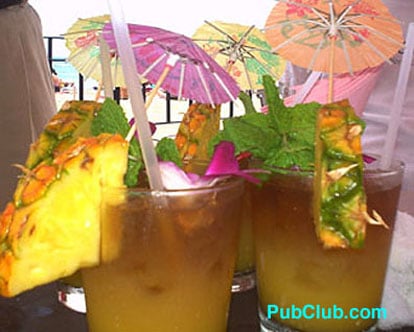

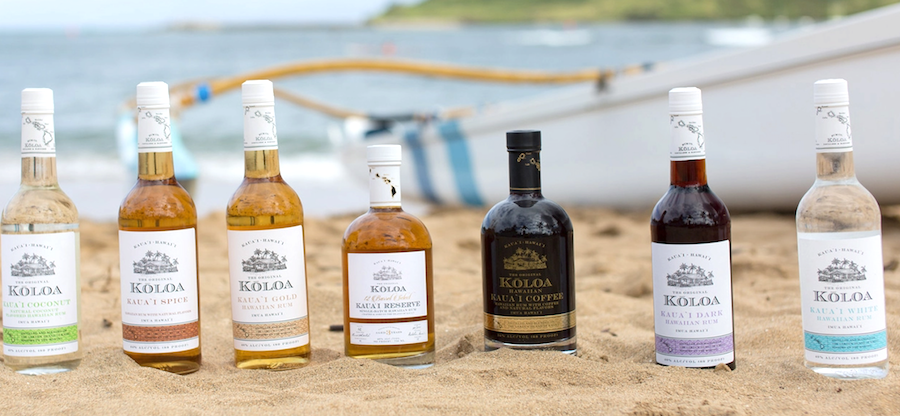
“As the first licensed distillery on the island, Kōloa Rum sets the standard for supporting Kaua`i’s local agricultural industry,” the distiller states on its website, koloarum.com. “Through Kōloa Rum, respect for the land comes in spades, using only the finest local ingredients, including pure cane sugar and pristine rainwater from Mount Wai‘ale‘ale, then twice distilled in copper pot stills. The results are evident in the Kōloa Kaua‘i White, Gold, Dark, Spice, Coconut, Cacao, Coffee, Cane Fire, and Aged Rums, as well as the ready-to-drink Mai Tai, Rum Punch, Pineapple Passion and Sweet Tea Cocktails. Kōloa’s artisanal rums are smooth, flavorful, award-winning, distinctly different, and uniquely Hawaiian.
“Kōloa Rum’s first batch was distilled and bottled in September 2009, which coincided with the opening of the Koloa Rum Tasting Room and Company Store at Kilohana Plantation in Lihue.”
I can certainly vouch for the quality of two Koloa rums. The coconut rum is so rich in real coconut flavor it’s as if a coconut has fallen from a tree and split open in your drink. It’s perfect simply mixed with a soft drink; that’s all you need. The Single Barrel Kauai Reserve is outstanding; put that with some juice or in a Mai Tai and you’ll think you’re on a Hawaii beach under a palm tree even if you’re in Peoria.
Prior to this, about the only Hawaiian rum available was the not-very-good Whaler’s Rum. So it’s good to know that Hawaii can produce excellent rums on par with those in the Caribbean.
Leave a Reply