By Kevin Wilkerson, PubClub.com Sports Blogger
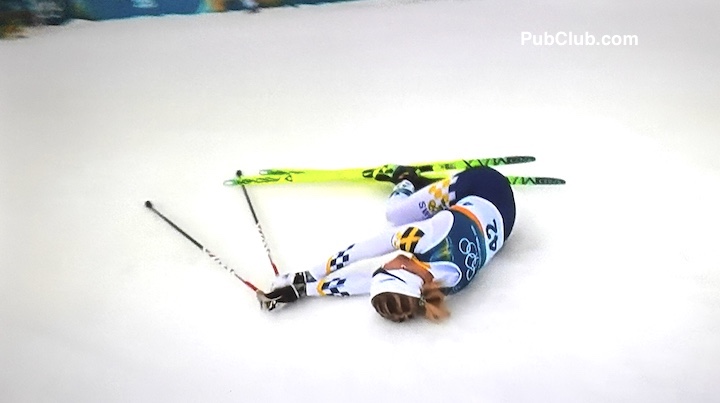
They drop like flies when they finish.
They breath heavily on thier sides and take several minutes to regain enough strength to even stand up again. They are among the most physically fit athletes on the planet yet they are so exhaused after they compete they can’t even stay on their feet when they finish.
They are the incredible athletes of the two most grueling sports in the Winter Olympics, cross-country skiing and the biathlon. The only other people who collapse at the end of their competition are marathon runners.
The Olympic cross-country skiers endure distances between 10 and 50 km (6.2 and 31 miles, respectively), going up and down hills, using ski poles to propel themselves up the toughest slopes. As anyone who has encountered a rise or a hill while traversing across a ski resort on skis knows, this is an exhausting exercise that requires a lot of arm and upper body strength. It wears you out to the point you have to stop at the end of it and let out a big, “whew!”
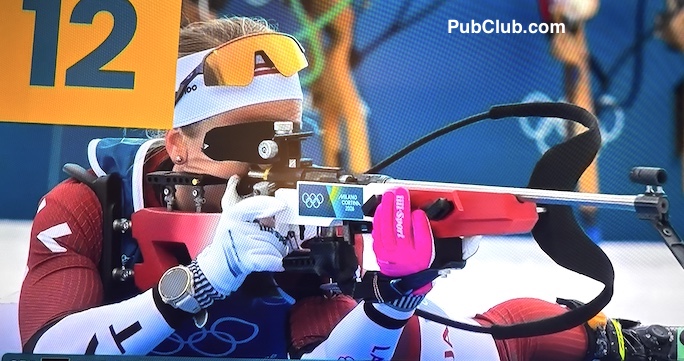
Now, add to this the element of sharp shooting and you have the biathlon. Not only do the athletes have to grind up slopes on skis but they have to stop and shoot five targets with a rifle. They are penalized a second for each one they miss. To this observer, that almost seems cruel, but it’s big part of the sport and helps to determine the medal winners.
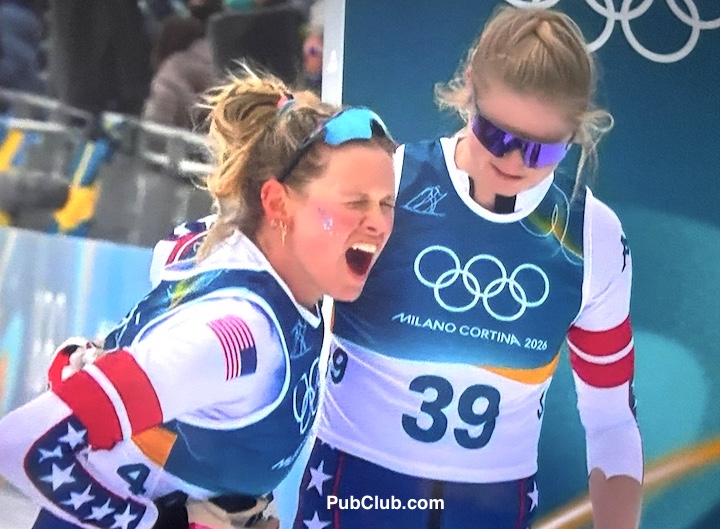
One Olympian even competed in cross-country skiing with bruised ribs. American Jessie Diggins suffered this painful injury during a fall druing a preliminary round yet somehow dug deep enough to not only compete in the final but persevered through the pain to win bronze. Watching her struggle through the course, I could not imagine the pain she was going through at the time. She literally fought to the finish, showing what the Olympics are all about and what it means to the athletes. When she crossed the finish line she not only collapsed but her face grimaced in agony as a teammate eventually helped her back to her feet and hugged her.
This may – and should – go down most dramatic moment of the 2026 Milan-Cortina Olympic Games.

Compare this to some of the less taxing sports at the Olympics. Say, curling, for example.
Now I ask which would you rather do: compete in a sport that has you grinding up slopes on a hillside in the outdoors in the elements or be playing the Olympic equivalent of shuffleboard in a climate-controlled arena? I know where I would prefer to be and it’s not passed out on a mountain.
It’s kind of unfair, really. Competitors in every sport, no matter how simple or difficult the game, are considered Olympic athletes. The medals they win are the same, regardless of the effort it took to win one. Curling, by the way, sounds like some type of weightlifting spinoff in the Summer Games rather than pushing a rock and sweeping a broom in front of it in the Winter Olympics.
Cross-country and the biathlon have no such comparisions. They stand on thier own and so do the athletes. Once they have recovered after crossing the finish line anyway.
Leave a Reply