Editor’s Note: This story was originally published on PubClub.com soon after Hurricane Katrina hit New Orleans on Aug. 20, 2005. It focuses on how the city rebuilt itself from the devastation.
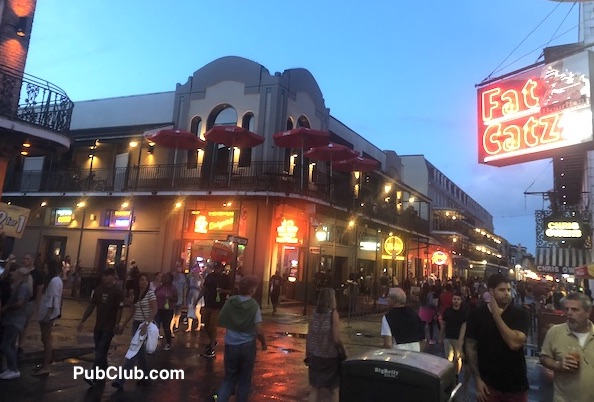
The music still plays in the French Quarter. The bars are still buzzing (as are the patrons) on Bourbon Street. Mardi Gras beads are hanging from balconies and trees along St. Charles Street. The crowds are back – perhaps bigger than ever – forJazz Fest.
New Orleans – once the picture of despair – is now in repair. It’s not under water, it’s not under siege, it’s not a picture of bad health.
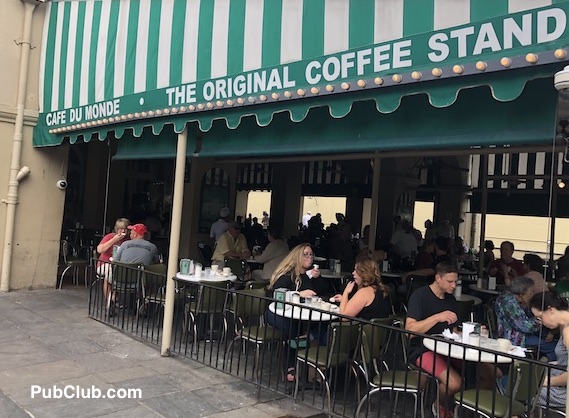
In many ways, New Orleans is just as it was before Hurricane Katrina. The French Quarter, largely undamaged when the hurricane hit, is its usual ol’ self. Restaurants are serving their signature Creole and New Orleans native dishes. Shops sell everything from swamp tours to Mardi Gras beads. Tourists line up for the beignets from Cafe du Monde. And there’s the music, still coming out of the stores, at the outdoor Market Cafe, up and down Bourbon Street, over on locals-heavy Frenchman Street and from live bands in bars throughout the city.
About the only difference a tourist can tell Katrina was even here is that the St. Charles Street car is under repair and no longer goes down to Camille’s Grill. That, however, is due to be fixed by the end of the year and it’s not too much longer before it will be going to the beautiful Garden District. That and the fact that, on a day-to-day basis, the numbers of people in the Quarter are just not what they were prior to August 29, 2005.
For it was on that day that New Orleans became mortal. Once a near fantasyland of hard partying and a live-life-to-the-max mantra, the people’s worst fear for years became reality. A category 5 hurricane not only hit the city, it did so nearly head-on and overwhelmed the levees. Almost instantly 80 percent of New Orleans was under water. It would be some time before this once-proud city could stand tall again.
Yet like a prize fighter who has been knocked around but not out, New Orleans has slowly gotten back on its feet. Services have been restored long ago, hotels are in perfect shape (some even better than before, using Katrina to make upgrades), the food is just fine and the drinks are flowing.
This is not to say there are not problems. Housing remains a major issue and gang crime has overtaken the devastated Lower 9th Ward. However, no tourist would ever mistakenly venture into this area and beyond Rampart Street outside of the Quarter has never been a place to wind up alone at night. The Quarter is perfectly safe from crime – aside from the occasional petty theft pickpocket.

The people, resistant Cajuns down to the core, have sidestepped the feeble efforts of FEMA and the government to pretty much take matters into their own hands. A group of big-name musicians from the city, chief among them Branford Marsalis and Harry Connick, Jr., are creating new life in an area called Musician’s Village. Brightly-colored houses, which look like something out of the Bahamas, are being built in an area that was destroyed. Residents backed up against the now-infamous 17th Street Canal are coming back into new or rebuilt homes. It almost has the appearance of an entirely new development.
“It’s heartwarming,” said Mary Beth Romig, Director of Communications and Public Relations for the New Orleans Convention and Visitor’s Bureau. “And it just feeds on itself. One block gets rebuilt, then the next block.”
The downtown area is becoming, for lack of a better word, yuppieized. Warehouses are being converted into high-end lofts and art galleries are flourishing. Local sit outside on nice days at the cafes in the lovely Irish Channel and later hit the wine bar. Canal Street – a longtime boulevard of broken buildings – will eventually receive a much-needed facelift. Tax breaks have brought Hollywood to the Big Easy with more than 20 movies with 2007 releases filmed or being filmed here. Cruise ships and conventions are back and next January, New Orleans will host the 2008 BCS Bowl for college football’s national championship.
Heck, even the Saints nearly made the Super Bowl.
So just like before the Hurricane, New Orleans is defined by its people and its culture. Katrina may have sadly taken some of the life out of the city. But it could not take away it’s soul.
Conclusion: New Orleans still faces threat from hurricanes and PubClub.com is positive it will always rise above it all, no matter what Mother Nature tosses at it.
Leave a Reply