Where To Eat And What To Eat In The Big Easy
New Orleans is as much a food town as it is a party town. I’ve eaten my way through the French Quarter and beyond over several visits, from po-boys and gumbo to muffulettas, oysters and some of the city’s legendary restaurants. Here’s my firsthand guide to where to eat — and what to eat — in the Big Easy.
By Kevin Wilkerson, Editor & Publisher, PubClub.com
While some people come to New Orleans primarily to drink, others come here just to eat.
Either way, everybody wins.
New Orleans has launched some of America’s most acclaimed chefs – Paul Prudhomme and Emeril Lagasse among them – and some of the world’s most original creations. Gumbo, red beans and rice and jambalaya are among the cuisine choices of the city. Oysters and crawfish are also two items seen on many New Orleans menus.
One of the great things about eating in “Nawlens” is that virtually every restaurant – from the small corner cafe to the famous kitchen – uses some variety of Cajun cooking in almost every dish. What diners get is food that is truly unique to this region. It can be puzzling to know what to order with so many types of different foods, so see below for a guide to the New Orleans creations.
It’s much more difficult to go wrong than go right with a restaurant choice. Yet New Orleans does has a few restaurants that long ago set the standard for all the others that have people rave about the food for weeks after they return home.
Best New Orleans Restaurants & Places To Eat
Galatorie’s is one of the city’s most traditional Creole restaurants, located on Bourbon Street just a couple of blocks from the mayhem. Brennan’s is a family-run restaurant with courtyard seating and The Palace is proud of its kitchen and is packed at both lunch and dinner. Arnaud’s is outstanding, has first-class service and boasts a huge wine cellar. It’s too loud for a peaceful, romantic dinner but the food is spectacular.
The most formal dining in New Orleans is at Commander’s Palace in the Garden District. Founded in 1880, it was only until the Brennan family took control in the 1970s that it became a legend. Commander’s Palace is traditional, excellent and pricey. The jazz brunch is popular among locals and repeat visitors. For years this ws one of the few places in town that requires a jacket to dine but now jackets and collared shirts are “preferred” tho don’t go in here wearing shorts and flip flops.. For a complete experience, the Chef’s Table has a chef cooking a seven-course meal personally for guests. This is the restaurant that has launched a thousand chefs, including Prudhomme and Lagasse.
Yet the oldest – and some argue the most legendary restaurant in New Orleans – is Antoine’s. It is the oldest family-run restaurant in the country and has fed FDR, JFK, the Pope and General George Patton. Antoine’s created Oysters Rockefeller (named for their “rich” sauce) and its wine cellar stores 25,000 bottles.
Jazz Legends Duke Ellington Louis Armstrong and Nat King Cole preferred the red beans and rice at Dooky Chase’s. It’s like eating in someone’s home and the traditional Southern menu also includes what might be the South’s best fried chicken.
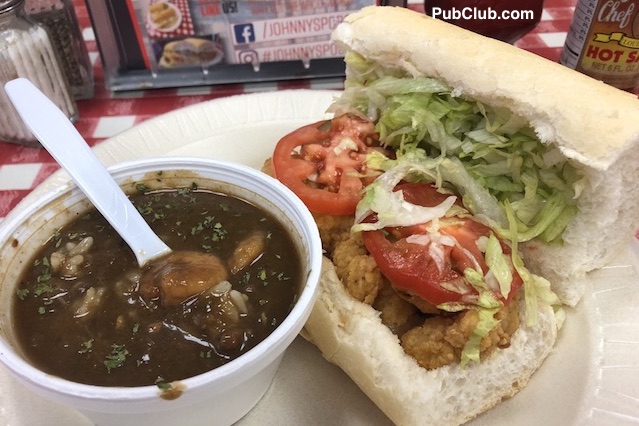
Okay, the Po-Boy. This traditional “poor boy’s” sandwich is all over New Orleans and one of the best is one of the Quarter’s most traditional restaurants is Johnny’s PoBoy; I suggest getting a cup of gumbo to go with it for a true New Orelans food experience.
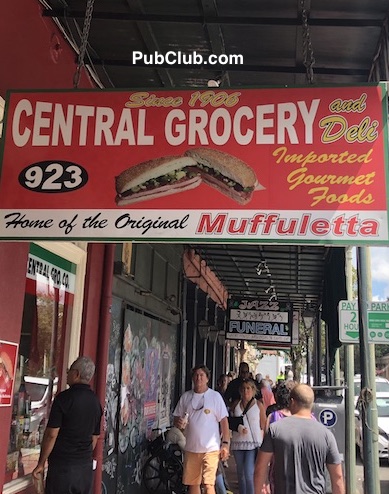
The Muffuletta is another true-to-new New Orleans sandwich. It was created by a Sicilian immigrant at Central Grocery on Decatur Street. This is really a market with a sandwich counter, so you’re constantly repositioning yourself as people walk in, out and by you. The “whole” sandwich is the size of a car tire, so only get it if you are sharing it.
Bourbon House Seafood (Bourbon and Iberville) specializes in oysters and any grilled fish entree is exceptional.
Locals and return visitors alike line up at Acme Oyster House for the city’s best oysters. At around $20 for most plates it’s not the best meal in town but it it is affordable for the masses and is one of the few places that serves hushpuppies.
Some of the best jambalaya in town is at Napoleon House. Located a few blocks away from K-Paul’s on Chartres Street, most dishes are in the mid-teens/low $20 range. I like to sit in the bar with the doors open to the street, although it has a beautiful dining area, as well. The service is very definitely French, so be patient!
A super-casual place is Coop’s Place. It’s a great place to start removing the Bourbon Street cobwebs from the previous night as it has the best bloody Mary in New Orleans.
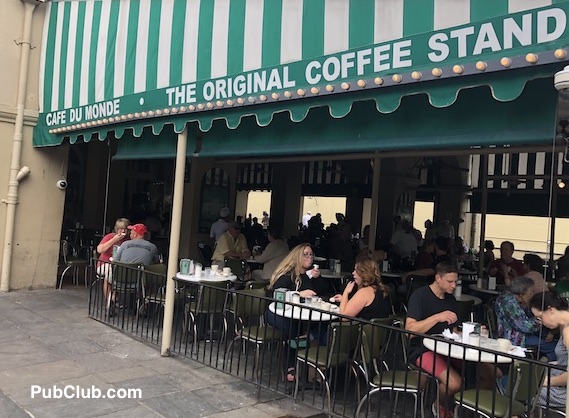
For lunch on a nice day, it’s hard to beat The Market Cafe in the French Market. Yes, the gumbo is good, but it also has a pair of smooth jazz quartets playing on each of the two patios. Pick a side and pull up a chair for a meal or just a drink. It’s such a Nawlens thing to do. It also has a breakfast buffet. Of course, the most famous place there is Cafe du Monde with its strong coffee and hot and fresh beignets.
For those on a budget, Mena’s Place on Iberville is a down-home diner serving hearty breakfasts and daily lunch specials. They are all $-$$ priced in true Southern style.
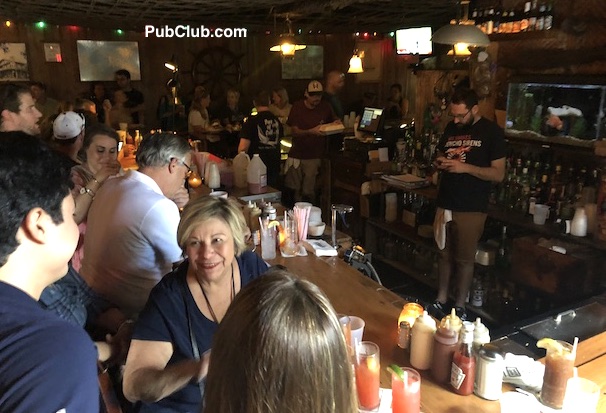
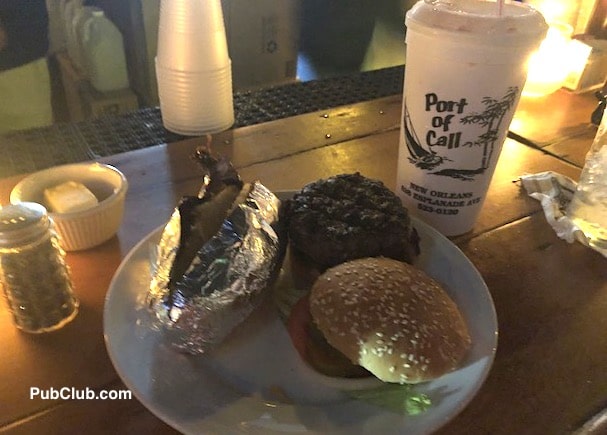
One doesn’t normally associate New Orleans with great burgers, but just ask locals about Port O Call just outside of the French Quarter. It’s not just a place to eat it’s a place to drink, and it’s as famous for its big and strong drinks (one is called Neptune’s Monsoon, “an old recipe used frequently as a last request by pirates condemned to walk the plank” is how it is described) as it is for its burgeres. The place is easy to spot; as you get near it, people will be walking around with large Port O Call to-go cups.
If you are taking the St. Charles streetcar, the Camellia Grill claims to be the home of Jimmy Buffett’s song, Cheeseburger in Paradise. It isn’t – he wrote it while at this place in the British Virgin Islands – but it’s a good lunch break, located at the Riverbend area (just tell the driver to let you off at Camellia’s).
Breakfast is not necessarily a New Orleans specialty, but several places for eggs and omelets can be found on Chartres, as well as Decatur near Jackson Square.
New Orleans Food Guide: What To Eat In The Big Easy
With a heritage that includes French, Spanish, African and Caribbean, the food in New Orleans has been influenced by a number of cultures. Many dishes are simply adaptations of a country’s traditional recipes – some Spanish here, a little bit of Caribbean on the side, that kind of thing. Kind of like a Mamba #5 of cooking.
The base for all New Orleans cooking is the sauce. It’s called a roux, and no two are seemingly alike. That is what makes eating here so great – you can have gumbo with popcorn shrimp until you blow up like a blimp but it may never taste exactly the same twice.
Eating New Orleans style means you had better like rice. It’s in nearly every dish, sometimes just a scoop in a bowl of gumbo or mixed with spices in dishes like jambalaya.
Seafood is also prevalent and the local “delicacy” is a local creature known as the crawfish. It resembles a mini-lobster and is often served boiled. Just pop the back and pull out the meat. Diehards claim the best part is to suck the heads. “Fer sure!,” they exclaim.
Here are some local food phrases found on virtually every New Orleans menu:
Étouffée -Smothered in butter and onions or roux. Often served with crawfish as crawfish etoufe.
Gumbo – A dark, rich soup with okra, chicken and sausage or seafood. Served with rice either in the bowl or as a scoop. Jimmy Buffett loves it so much he claims you don’t have pay him but feed him. “I will play for gumbo,” he sings.
Jambalaya – Rice cooked with chicken and sausage (sometimes shrimp is added).
Lucky Dogs – A chili hot dog sold all over town out of mobile carts. Especially popular late at night on Bourbon Street.
Muffuletta– Italian sandwich of ham, salami, cheeses and olive oil on round Italian bread. Locals only get it at the Central Grocery on Decatur Street.
Po’-Boy – A large sandwich on French bread. Often it’s fried seafood – oysters, shrimp or soft-shell crab. Very affordable, thus its name.
Red Beans and Rice – Just like it sounds, with sausage and with a spicy kick.
Roux – Flour, sautéed with oil, with a peanut butter consistency and chocolate color. The sauce that is the basis for most New Orleans foods.
Kevin Wilkerson is the founder of PubClub.com, an award-winning journalist and nightlife expert who has covered destinations, events and nightlife for more than two decades. While working as a newspaper reporter, he received an Associated Press award for investigative journalism. He has been to New Orleans many times.
 Next Stops on the New Orleans Party Bus
• New Orleans Complete City Guide
• Cool Things To Do In New Orleans
• PubClubbing In The Bourbon Street Bars!
• How I Spent $30 In 30 Seconds On Bourbon Street
• Bars Along The St. Charles Streetcar